Nigerian commercial property owners face an unrelenting challenge: escalating energy costs that can consume 50-60% of operational budgets while delivering inconsistent climate control and frequent system failures. Traditional HVAC installations across Lagos and Abuja struggle under Nigeria’s demanding tropical conditions, operating inefficiently while generating maintenance expenses that compound financial pressure. The gap between initial installation costs and long-term operational performance creates a dilemma where budget-conscious decisions often lead to expensive consequences.
The impact extends beyond utility bills. Inefficient HVAC systems create uncomfortable working environments that reduce productivity, accelerate equipment wear that triggers frequent breakdowns, and fail regulatory compliance requirements increasingly enforced across Nigeria’s commercial sector. Tenant dissatisfaction rises as indoor temperatures fluctuate unpredictably, air quality deteriorates from inadequate ventilation, and operational disruptions damage business reputations. For property developers targeting premium market segments, substandard climate control infrastructure undermines competitive positioning and limits rental income potential regardless of other facility improvements.
German HVAC technology provides a proven solution through precision engineering that delivers measurable energy savings while enhancing reliability and performance. Nazeedes Engineering Ltd leverages German-trained expertise and partnerships with premium manufacturers, including Carrier, Panasonic, and Fujitsu, to implement systems achieving 30-50% energy consumption reductions compared to conventional installations. This technical approach combines advanced heat pump technology, intelligent control systems, and climate-specific design methodology that transforms HVAC infrastructure from operational liability into a strategic asset contributing to property value and competitive advantage throughout Nigeria’s evolving commercial real estate landscape.
1. German Engineering Standards: The Foundation of HVAC Excellence
German engineering standards represent more than technical specifications—they embody decades of refined methodology prioritizing precision, efficiency, and long-term reliability. Germany’s Energy Conservation Regulations mandate rigorous performance calculations, airtightness requirements, and equipment efficiency thresholds that substantially exceed minimum standards commonly applied in developing markets. These regulations require computer modeling to verify expected energy consumption, mandatory HVAC system inspections every decade, and comprehensive documentation demonstrating compliance throughout building lifecycles.
Nazeedes Engineering applies these German standards to Nigerian commercial projects through systematic design processes that begin with detailed load calculations accounting for building orientation, thermal envelope performance, and occupancy patterns. Equipment selection follows strict efficiency criteria rather than cost minimization, ensuring installed systems perform reliably under Nigeria’s tropical conditions. Installation precision prevents the refrigerant leaks, duct losses, and control failures that plague hastily completed projects. This German-trained methodology has defined Nazeedes’ reputation since 2001, delivering HVAC installations that sustain performance and efficiency year after year across Lagos and Abuja’s most demanding commercial environments.
2. Advanced Heat Pump Technology for Tropical Climate Performance
Heat pump technology revolutionizes commercial HVAC performance by moving heat efficiently rather than generating it through energy-intensive combustion or resistance heating. Modern heat pump systems can deliver up to four times more heating or cooling energy than the electricity they consume, achieving efficiency levels impossible with traditional equipment. Commercial building implementations demonstrate energy cost reductions of 40-50% compared to conventional rooftop units while providing superior temperature control and improved indoor air quality through enhanced filtration and ventilation capabilities.
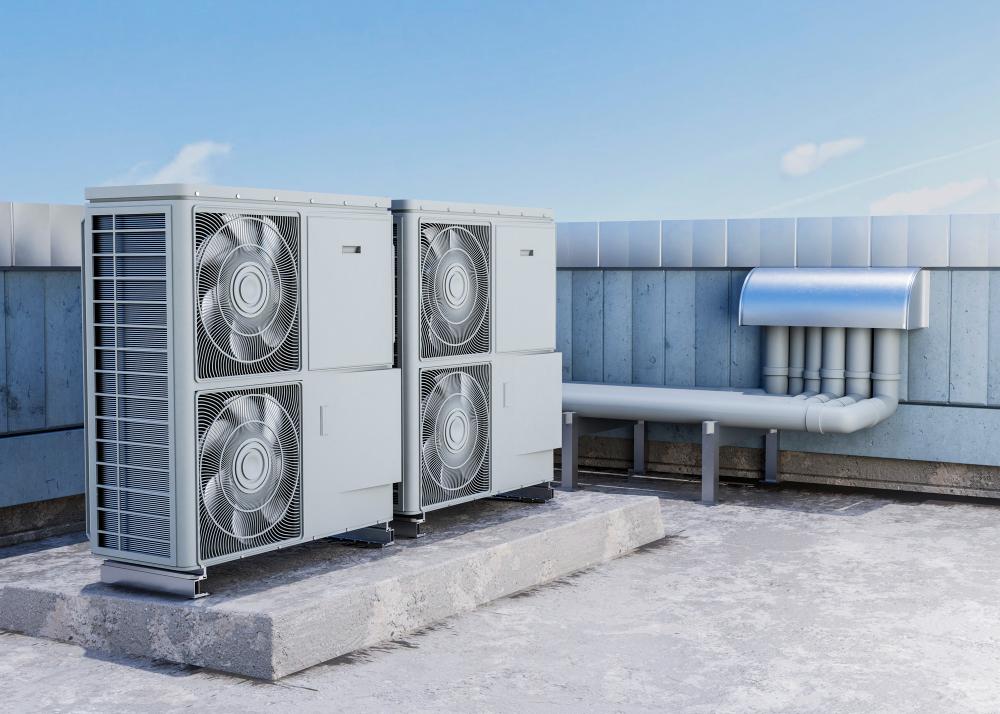
In Nigeria’s tropical climate, properly specified heat pump systems maintain efficient operation even during peak temperature periods when traditional systems struggle. Nazeedes Engineering deploys air-source heat pumps engineered for high ambient temperature performance, incorporating variable-speed compressors that modulate output matching actual demand rather than cycling wastefully. Intelligent defrost controls, optimized refrigerant circuits, and advanced heat exchangers ensure sustained efficiency during both cooling-dominated operations and occasional heating requirements. For commercial facilities throughout Lagos and Abuja, these technical advantages translate directly into lower operational costs, reduced maintenance requirements, and comfortable indoor environments that support tenant satisfaction and property value appreciation over decades of reliable service.
3. Intelligent Climate Control Systems and Building Automation
German HVAC technology integrates sophisticated control systems, transforming basic temperature regulation into comprehensive building automation that optimizes energy consumption while enhancing occupant comfort. Model-predictive control schemes analyze historical performance data, weather forecasts, and occupancy schedules to anticipate heating and cooling requirements, preconditioning spaces efficiently rather than reacting to temperature deviations. Research demonstrates these intelligent control approaches achieve energy demand reductions of 20-37% compared to conventional time-based systems operating on fixed schedules, regardless of actual building needs.
Nazeedes Engineering implements building automation solutions that coordinate HVAC operation with lighting, security, and access control systems for holistic facility management. Wireless sensor networks monitor temperature, humidity, and air quality throughout buildings, providing real-time data enabling rapid response to changing conditions. Zone-based control allows independent climate management for different areas, avoiding energy waste from heating or cooling unoccupied spaces. For commercial property managers overseeing multiple facilities across Lagos and Abuja, centralized monitoring platforms provide portfolio-wide visibility, enabling proactive maintenance, performance optimization, and detailed energy consumption analysis, supporting continuous improvement initiatives that reduce operational costs while maintaining optimal tenant environments.
4. Variable Refrigerant Flow Systems for Commercial Applications
Variable Refrigerant Flow technology represents one of German HVAC engineering’s most significant innovations for commercial applications. VRF systems use sophisticated refrigerant distribution networks connecting multiple indoor units to outdoor condensing equipment, allowing simultaneous heating and cooling in different building zones while recovering waste heat from cooling areas to warm others. This capability proves particularly valuable in commercial buildings where server rooms require constant cooling while office spaces need heating, enabling energy recovery that substantially reduces total system consumption.
Modern VRF installations achieve seasonal energy efficiency ratios exceeding 20 in optimal conditions, delivering exceptional performance that translates directly into operational cost savings. The systems provide precise temperature control within 0.5°C of setpoints, eliminating the uncomfortable fluctuations characteristic of conventional equipment cycling on and off. Quiet operation enhances occupant comfort while modular architecture allows easy expansion as building requirements evolve. Nazeedes Engineering specifies VRF technology for premium commercial developments throughout Nigeria, where superior performance justifies initial investment through reduced energy costs, lower maintenance requirements, and enhanced tenant satisfaction, supporting premium rental rates that maximize property returns over long-term holding periods.
5. Energy Recovery Ventilation and Indoor Air Quality Enhancement
Maintaining indoor air quality while managing energy consumption presents a critical challenge for commercial buildings in Nigeria’s tropical climate. Conventional ventilation systems exhaust conditioned air while introducing hot, humid outdoor air, requiring substantial cooling and dehumidification energy. Energy Recovery Ventilation systems address this inefficiency by transferring heat and moisture between exhaust and incoming air streams, pre-conditioning outdoor air before it enters HVAC systems. This technology reduces ventilation energy consumption by 50-70% while ensuring adequate fresh air exchange meeting indoor air quality standards.
German HVAC engineering emphasizes proper ventilation as essential for occupant health and productivity. Research demonstrates that improved indoor air quality reduces illness-related absenteeism, enhances cognitive performance, and increases worker satisfaction. Nazeedes Engineering integrates ERV technology with advanced filtration systems, removing particulates, allergens, and airborne contaminants that compromise health in densely occupied commercial spaces. For office buildings, retail centers, and educational facilities across Lagos and Abuja, these ventilation solutions provide measurable benefits through healthier indoor environments, lower HVAC operating costs, and compliance with evolving building codes increasingly emphasizing occupant wellness alongside energy efficiency as essential performance criteria for modern commercial properties.
6. Predictive Maintenance and System Performance Optimization
German HVAC technology incorporates sophisticated monitoring capabilities enabling predictive maintenance strategies that prevent equipment failures before they disrupt operations. Embedded sensors track compressor performance, refrigerant pressures, airflow rates, and power consumption, identifying degradation patterns indicating impending problems. Building management systems analyze this data continuously, alerting facility managers when maintenance becomes necessary while equipment remains operational, rather than waiting for catastrophic failures requiring emergency repairs at premium costs with extended downtime impacting tenants.
This proactive approach delivers substantial operational savings through reduced maintenance expenses, extended equipment lifecycles, and eliminated emergency service calls disrupting building operations. Systematic maintenance scheduling optimizes technician efficiency while ensuring critical systems receive attention before minor issues escalate. Performance analytics identify optimization opportunities, including control adjustments, equipment upgrades, and operational modifications, improving efficiency beyond original design specifications. Nazeedes Engineering provides comprehensive maintenance services leveraging these German-engineered monitoring capabilities, protecting client investments while ensuring HVAC systems sustain peak performance throughout decades of service. For commercial property portfolios across Nigeria, this technical support transforms HVAC infrastructure from an operational concern into a reliable asset contributing consistently to property value and tenant satisfaction.
7. Financial Analysis: Investment Returns and Operational Savings
Evaluating German HVAC technology requires a comprehensive financial analysis accounting for both initial investment and long-term operational economics. While premium systems command higher upfront costs compared to conventional equipment, energy savings typically achieve payback periods of 3-5 years for commercial applications with continued savings throughout 20+ year equipment lifecycles. A medium-sized Lagos office building reducing HVAC energy consumption 40% can save ₦4-6 million annually in electricity costs, generating substantial returns over system lifetime while reducing exposure to escalating utility rates that erode profitability across Nigerian commercial real estate.
Additional financial benefits include reduced maintenance costs from reliable equipment requiring fewer repairs, avoided downtime expenses from system failures disrupting operations, and enhanced property values from superior infrastructure supporting premium market positioning. Tenant retention improves as comfortable, consistently controlled environments reduce vacancy costs and turnover expenses. For new developments, efficient HVAC systems enable smaller electrical service requirements, reducing infrastructure investment. Nazeedes Engineering provides detailed financial modeling demonstrating total cost of ownership comparisons, helping property developers and facility managers make informed decisions, balancing initial investment against long-term value creation. The analysis consistently demonstrates that German HVAC technology delivers superior financial returns while providing operational excellence that distinguishes premium commercial properties throughout Nigeria’s competitive real estate marketplace.
Frequently Asked Questions
- How much can German HVAC technology really save on energy costs in Nigeria?
Energy savings vary based on existing system efficiency and building characteristics, but properly designed German HVAC installations typically reduce energy consumption by 30-50% compared to conventional systems. For a medium-sized commercial building in Lagos, this translates to annual savings of ₦3-6 million or more. Advanced heat pump systems, intelligent controls, and energy recovery ventilation contribute to these savings while improving indoor comfort and air quality. Nazeedes Engineering performs detailed energy audits and system modeling to provide specific savings projections for individual projects.
- Can heat pump technology work effectively in Nigeria’s hot climate?
Modern heat pump technology is specifically engineered to operate efficiently in high ambient temperature conditions typical of Nigeria’s tropical climate. Advanced compressor designs, optimized refrigerant circuits, and sophisticated controls ensure reliable performance even during peak temperature periods. Air-source heat pumps from premium manufacturers like Carrier, Panasonic, and Fujitsu maintain efficiency at outdoor temperatures exceeding 40°C. Nazeedes Engineering specifies equipment tested and proven for tropical applications, ensuring systems perform reliably throughout Nigeria’s demanding climate conditions.
- What is the expected lifespan of German HVAC systems versus conventional equipment?
German-engineered HVAC systems typically achieve operational lifespans of 20-25 years with proper maintenance, compared to 10-15 years for conventional equipment installed without rigorous engineering standards. Premium components, precision installation, and systematic maintenance protocols contribute to extended equipment lifecycles that reduce total cost of ownership. Nazeedes Engineering provides comprehensive maintenance services, ensuring systems sustain peak performance throughout their design life, protecting client investments while maximizing return on HVAC infrastructure expenditures over decades of reliable operation.
- How quickly does investment in German HVAC technology pay back?
Payback periods for German HVAC installations in Nigerian commercial buildings typically range from 3-5 years based on energy cost savings alone. Additional financial benefits, including reduced maintenance expenses, avoided downtime costs, and enhanced property values, accelerate return on investment. Government incentives, utility rebates, and financing programs can further improve project economics. Nazeedes Engineering provides detailed financial analysis, including cash flow projections, net present value calculations, and sensitivity analysis, helping property owners understand investment returns and make informed decisions about HVAC infrastructure upgrades.
Conclusion
German HVAC technology transforms Nigerian commercial buildings into energy-efficient, comfortable environments, delivering measurable operational savings and enhanced property value. Through advanced heat pump systems, intelligent controls, and precision engineering, property owners achieve 30-50% energy consumption reductions while improving indoor climate quality and ensuring long-term reliability throughout Lagos, Abuja, and other major Nigerian cities.
Ready to reduce your building’s energy costs while enhancing tenant satisfaction? Contact Nazeedes Engineering Ltd today to discuss how German HVAC technology can transform your commercial property’s operational performance and financial returns through proven engineering excellence and comprehensive technical support.